
X-Lung and magnetism
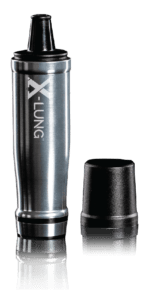
The X-Lung works by magnetising the oxygen in the air inhaled through it. Although little is known about the mechanism by which the X-Lung, and magnetism in general, exerts its positive effects on health and exercise capacity, magnetism has a long history in health and well-being. There are many studies which have examined the effects of magnetism on living things; in the next months I will document in this series of blogs some of the scientific evidence-base of magnetism and its effects on various medical conditions, culminating with data from the research studies which showed that the X-Lung has profound effects on exercise capacity.
A Brief History of Magnetism in Health and Disease
Many civilizations throughout history, including the Hebrews, Arabs, Indians, Chinese, Egyptians and Greeks, used magnets to treat illness and enhance the lives of human beings.
As early as 200 BC, the Greek physician, Galen, mentions the use of magnetism in healing. In the 4th century Hippocrates documented the medicinal use of magnets, and in about 1000 AD the Persian physician Ali Abbas described his findings in using magnetism to treat spasms and gout. More recently, it has been suggested that magnetic therapy may be useful in treating many medical conditions, including fractures, pain, wounds, neuropathy and psychiatric disorders.
There is also increasing evidence that magnetism can have a direct effect on the molecular and cellular physiology of living organisms. Despite these known physiological effects of magnetic fields, there is very limited information and research related to the use of magnetic therapy to potentially improve athletic performance. This will be addressed in detail in a later blog. However, we will first explore interesting effects of magnetism.
Experiments using magnetised water
A study which examined the germination of rye grass seeds that had been watered with “normal” water compared to water treated with a magnet, showed an 8% germination rate in the seeds which were watered with the “normal” water, while seeds that had been watered with the magnet-treated water showed a 68% germination rate (more than an eight-fold increase in germination). In addition, the magnet-treated watered plants were 28.6% taller 8 days after germination.
The influence of magnetically treated water on the rearing of larvae of the European sheatfish, Silurus glanis, was studied in a placebo-controlled study. In this experiment, a feeding brood of European sheatfish was reared in two groups. One group was kept in tanks supplied with water that had passed through a magnetic field. The “control” group was kept in tanks supplied with water without treatment with a magnetic field. After 15 days, in the magnet-treated group, there was an average weight gain of 0.46g, whereas in the control group in which the water was not magnetised, there was a loss of weight of -0.78g. The magnet-treated water in some way affected the growth of the larvae.
Experiments using magnetised oxygen
In addition to water, the most important crucial molecule to sustain life is oxygen. Like water, this molecule also alters in atomic structure when exposed to a magnetic field. Oxygen thus exhibits a degree of magnetization that is proportional to the strength of the magnetic field in which it is placed. Interestingly, it has been shown that levels of dissolved oxygen in a solution containing heme iron(III)-complexes increase significantly when placed in a magnetic field. The result of the magnetic field is that there is more bio-available dissolved oxygen which can then be utilised and potentially incorporated into living tissues. This could be a potential mechanism by which a magnetic field can affect human athletic performance.
It thus appears that magnetic fields can have an effect on water and oxygen molecules, affecting their structure and characteristics. As the body consist predominantly of water and relies on oxygen for respiration, these changes may ultimately affect the cells and tissues of the body. These possible effects will be discussed in future blogs.
(Modified from thesis of Dr Craig Roberts; with permission)